Your company’s records are an asset with an expiry date.
Frontier AI labs license real operational data: code, tickets, chat, documents. We price your archive, take it to the buyers who pay most, and close the deal before your systems delete it.
Every working day your company writes down how it works.
Each mark in this figure stands for a batch of records. The ones in vermilion are being deleted while you read this.
- Code
- Trackers
- Chat
- Documents
- Support
- CRM
- SOPs
- QA
Filed by year and record type, the same archive stops being noise.
It becomes a package a buyer can price: dated, typed and complete.
Frontier AI labs pay for exactly this.
$100K to $2M+
What micro1 publishes as company compensation for an approved data package; Mode puts the range at $100K to $5M. Where your company falls is what the valuation below estimates.
The programs we refer companies to. Their terms are published.
Frontier AI labs. None of them is a client of ours.
Who qualifies. micro1 asks for 30 or more employees, records mostly in English, in the US or Western markets. Mode asks for 50 or more employees (10 for legal firms, 15 for accounting, medical and finance), based in the US, Canada, the UK or Australia.
Ranges and requirements read on micro1 and Mode’s own pages on 27 October 2026. Marks belong to their owners; no partnership or endorsement is implied.
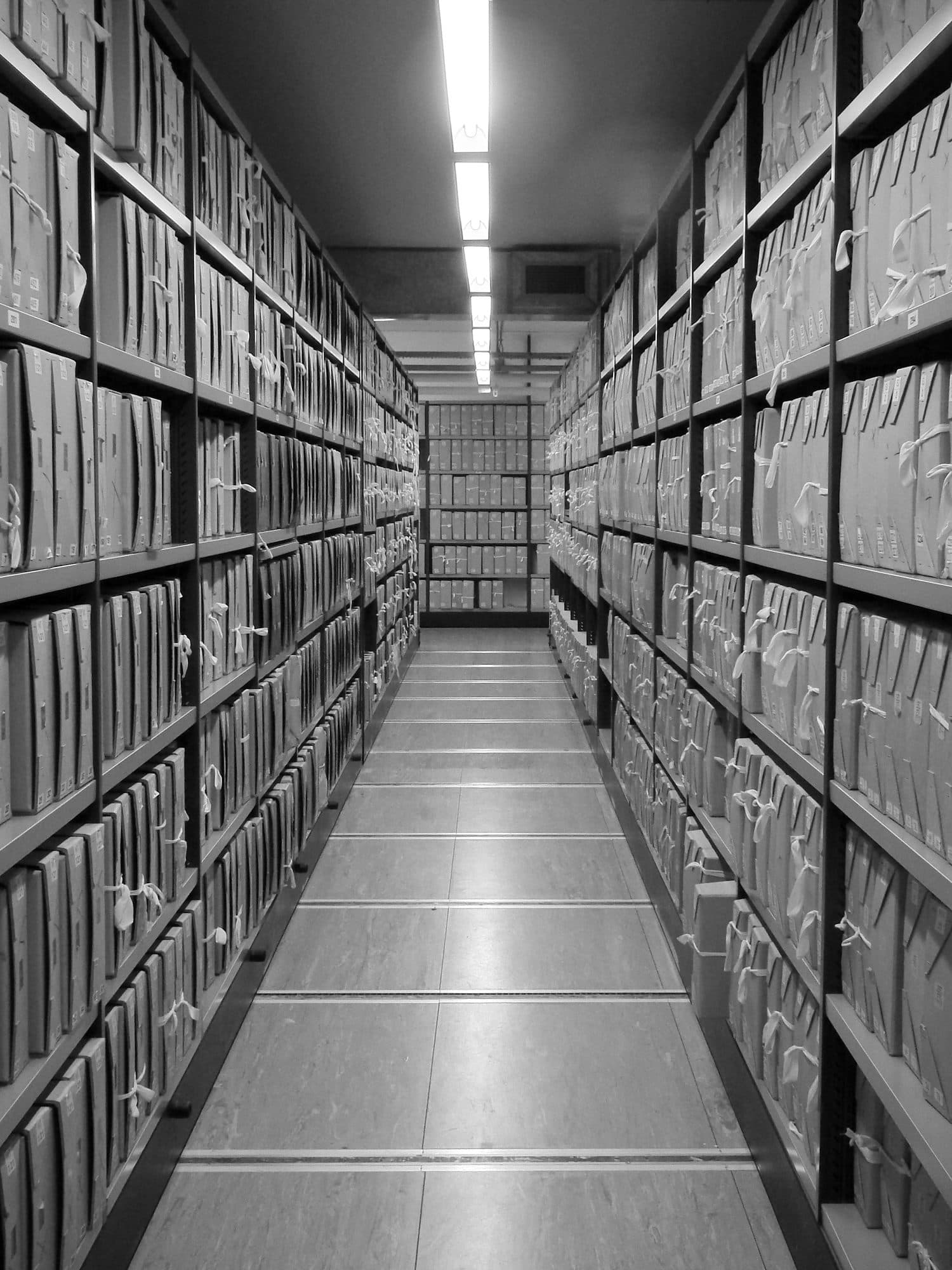
Every system you run is an archive.
The nineteen systems buyers see most, what each export holds, and the record type it files into.
Photo: The National Archives (UK), CC BY 3.0, grayscale.
Pick a system to see what its export holds and what one of its records looks like.
Conversations
Work
Knowledge and SOPs
Customers
Diagrams

Slack
Channels, threads, DMs, files
- Exported as
- Workspace export, JSON
- Files as
- Chat
- A buyer learns
- Decisions, in the order they were made
One record from Slack, illustrative
# ops-escalations
Dana R. 9:41
Rolled back 4.2.1. Root cause was the retry queue filling during the import.
Lee M. 9:43
Adding a drain step to the runbook so this cannot repeat.
Dana R. 9:44
Thanks. Closing the incident at 10:00.
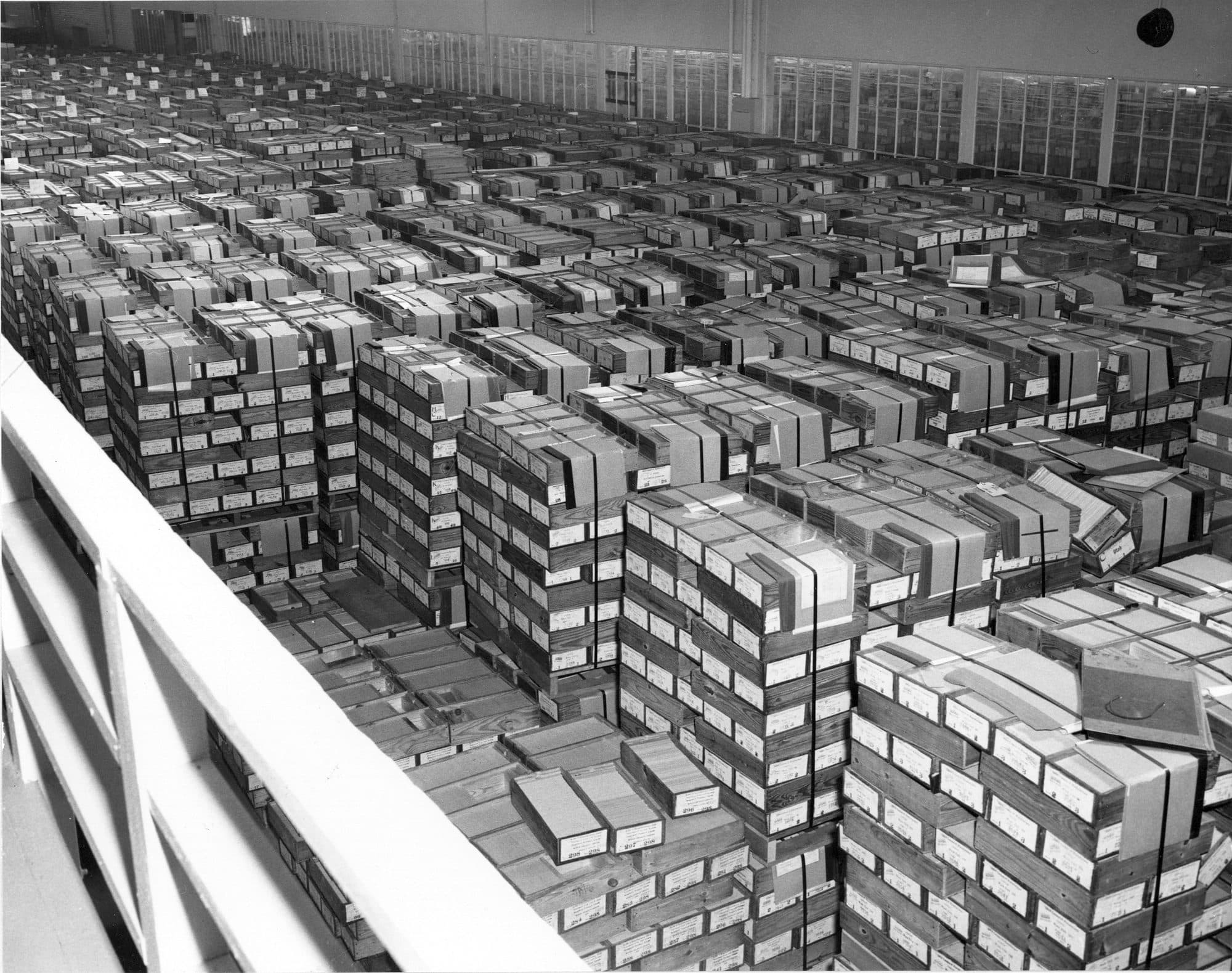
Your systems are already deleting it.
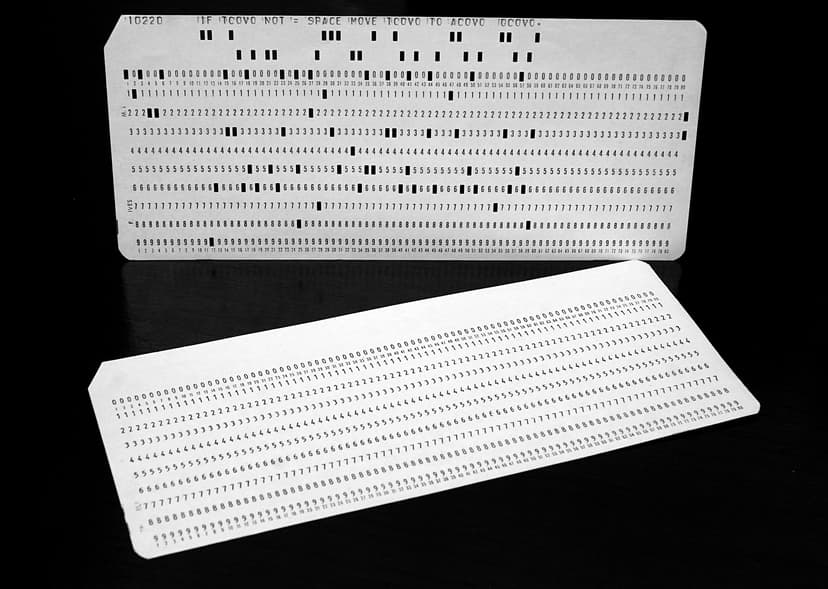
Retention windows close, accounts get deleted, people leave and take the context with them. Below are the published retention limits of the systems your records most often live in. Open a folder, then a record, to see the vendor’s own page.

| Record | Usually lives in | Clock | Starts | What happens |
|---|---|---|---|---|
| Code | GitHub | No restore | when an organization is deleted | Deleting an organization removes its repositories, issues, pull requests and wikis. GitHub cannot restore it. |
| Trackers | Linear | 48 hours | after a workspace deletion is confirmed | Any admin can cancel for 48 hours. After that every issue, project and comment is permanently deleted. |
| QA | GitHub Actions | 90 days | by default, for every run | Build logs and artifacts are kept for 90 days unless someone changes the setting. |
| Chat | Slack, free plan | 1 year | rolling, since 26 August 2024 | Only the last 90 days are visible. Messages and files older than a year are permanently deleted. |
| Support | Zendesk | 90 days | after the account is canceled | Permanent deletion of service data begins 90 days after cancellation. |
| CRM | Salesforce | 211 days | after the contract ends | Data can be requested back for 30 days. It leaves production by day 211 and backups by day 301. |
| Documents | Google Workspace | 20 days | after a person's account is deleted | An admin can restore a deleted user and their Drive for 20 days. Then the files are gone. |
| SOPs | Microsoft 365 | 180 days | after the subscription ends | Thirty days expired, ninety days disabled, then deleted. A canceled subscription's data is gone by day 180. |
Read on each vendor’s own page on 26 October 2026. Paid plans and contracts vary; we check yours during qualification.
Every record is cleaned on the way out.
Twelve of the systems buyers see most. Each dot is a record leaving one of them. Past the vermilion line it no longer names anyone.

Exported by your admins
De-identification
Names, contacts, customer and payment details, secrets
Filed by record type
Five steps from your systems to a signed license.
Your admins hold the keys at every step. No buyer learns your company’s name, and nothing is licensed, until you approve it.
Step 1: Qualify
We list what still exists, where it lives and when each system deletes it, and check it against what buyers require.
- Every system
- Deletion clocks
- Buyer needs
Step 2: Export
Your admins run each system's own export. We never hold your raw data.
- Your admins
- Native exports
- No raw data with us
Step 3: De-identify
Personal and customer data is removed before anything leaves your hands.
- People
- Customers
- Secrets
Step 4: Value
Records are filed by type and year with a data card, and priced with the model below against live buyer demand.
- Type and year
- Data card
- Live demand
Step 5: Route and close
We take the package to the buyers who pay most, non-exclusively where we can. Your company signs their license and is paid the fee.
- Buyers you approve
- Their license
- Fee to you
What de-identification removes.
Each placeholder stays the same across the whole archive, so a thread still reads as a conversation and a ticket still reads as a case.
Before, in your Slack
@sarah.kim can you refund Acme Logistics for order #48213? Card ending 4421, contact jane@acmelogistics.com
After, in the licensed copy
@person_0217 can you refund [customer_0089] for order [order]? Card ending [removed], contact [email]
People
person_0217Names, handles, emails and phone numbers become consistent placeholders, so a thread still reads.
Customers
customer_0089Company names, account and order numbers become tokens.
Money and identity
[removed]Card and bank details and government IDs are removed outright.
Secrets
[secret]API keys, passwords and tokens are stripped from code and chat.
Health data
Health records are excluded unless your counsel clears a de-identification method for them.
Human review
A sample of every package is read by a person before anything is licensed.
How it pays.
2.1x to 2.42x
Your company is paid the license fee.
Licensed once, to one buyer, it is one fee. Licensed non-exclusively to several buyers, the same archive can pay 2.1 to 2.42 times as much, by our syndication model.
| Licensed once | $377,395 |
|---|---|
| Several buyers, 2.1x | $792,530 |
| Several buyers, 2.42x | $913,296 |
$50,000+
We are paid by the buyer’s referral program, not by you.
micro1 pays its referrer $50,000 on deals up to $700,000 and 7.5% of the whole deal above that. Mode pays the greater of $50,000 or 6% of license fees. Both pay only after the deal completes, so our fee grows only as your deal does.
micro1
Deal $1,000,000Operating company $75,000Closed company $75,000
$50,000 on deals up to $700,000, then 7.5% of the whole deal. Closed companies: $75,000 up to $1 million, then 7.5%. Published terms
Mode
Deal $1,000,000First five US referrals $60,000Outside the US $60,000
The greater of $50,000 or 6% of license fees on its first five US referrals, with higher tiers after; 6% elsewhere. Published terms
| Deal value | micro1, Operating company | micro1, Closed company | Mode, First five US referrals | Mode, Outside the US |
|---|---|---|---|---|
| $250,000 | $50,000 | $75,000 | $50,000 | $15,000 |
| $500,000 | $50,000 | $75,000 | $50,000 | $30,000 |
| $700,000 | $50,000 | $75,000 | $50,000 | $42,000 |
| $833,333 | $62,500 | $75,000 | $50,000 | $50,000 |
| $1,000,000 | $75,000 | $75,000 | $60,000 | $60,000 |
| $1,500,000 | $112,500 | $112,500 | $90,000 | $90,000 |
| $2,000,000 | $150,000 | $150,000 | $120,000 | $120,000 |
Terms as each program publishes them, read 27 October 2026. Mode’s floor applies to its first five US referrals, with higher tiers after; outside the US it pays 6% with no minimum.
Why not go to micro1 or Mode directly?
You can. Both publish how they work, linked above, and you can approach either one yourself.
Going direct gets you one buyer’s intake form. We check your archive against what every buyer requires before the retention windows close, prepare a package they can price, and place it with several buyers at once. That last step is where the 2.1x to 2.42x comes from.
The buyer’s referral program pays us for that work. You pay nothing.
Value your archive.
The same model we use on the first call. Enter your company’s numbers and the estimate updates as you go, with the math shown. Nothing you enter leaves your browser.
People at the company's largest
Where is the company today?
Roughly how much data, excluding video
Fine adjustments90% English, United States, Software
Where the company is based
Industry
Open to ongoing work with a buyer
What we commit to.
In writing, from the first call to the signed license.
No fee from you.
We are paid by the buyer's referral program, and only after your deal completes.
An NDA before anything.
We sign a mutual NDA before we look at a single export.
You approve every introduction.
No buyer hears your company's name until you say so.
Non-exclusive by default.
You can license the same archive to several buyers, which our syndication model puts at 2.1x to 2.42x a single license.
Your keys, your exports.
Your admins run every export. We never hold raw data.
Your counsel sees every license first.
We send each license to your lawyers before you sign, and you can walk away at any point until then.
Questions owners ask.
Anything else, ask us directly at mw@empathylabs.ai.
What exactly are we licensing?
A license to a de-identified copy of records your company already produced: code and its reviews, tickets, chat, documents and SOPs, CRM and support history. Your company keeps the original and keeps operating with it.
Who buys it, and what for?
Frontier AI labs and the data programs that supply them. They use real operational records to train and evaluate models on how work is actually done: how code is reviewed, how a ticket is resolved, how a decision is reached in chat.
What does it cost us?
Nothing. We are paid by the buyer's referral program after the deal completes, as set out under How it pays.
Is it legal for us to license this?
Often, but it depends on what you own and what you have promised. Customer contracts, privacy law and employee agreements can limit what is licensable. Qualification checks for those limits first, and every license goes to your counsel before you sign. Nothing on this page is legal advice.
Will anyone be identifiable?
Licensed copies are de-identified: people, customers, payment details and secrets are replaced or removed before anything leaves your systems, and a person reads a sample of every package before it is licensed.
We have shut the company down. Is it too late?
Often not. Archives tend to outlive the company, in an admin's export or in a cloud account that is still on a clock. Closed and winding-down companies qualify, and at least one buyer program runs a track for defunct companies. Some clocks leave days, not months, so it pays to check early.
How long does it take?
The first reading comes out of one conversation. After that the timeline depends on how many systems you export and on each buyer's diligence. You get dates with the reading.
Can we license the same data more than once?
Yes, when every license is non-exclusive, which is our default. Licensed to several buyers, the same archive can pay 2.1 to 2.42 times what a single license does, by our syndication model.
Find out what your records are worth.
Tell us which records still exist. We come back with an estimate checked against what buyers are paying now, and the date you need to act by.
- 01A 30-minute call, under mutual NDA if you want one.
- 02What still exists, and what it is worth.
- 03Which buyers to approach, and by when.
You deal with Mathieu Wauters of Empathy Labs from the first call to the signed license.
Mathieu Wauters, Empathy Labs, Los Angeles